Protein folding rules & other mysteries uncovered
A surprisingly simple rulebook to fold all proteins |
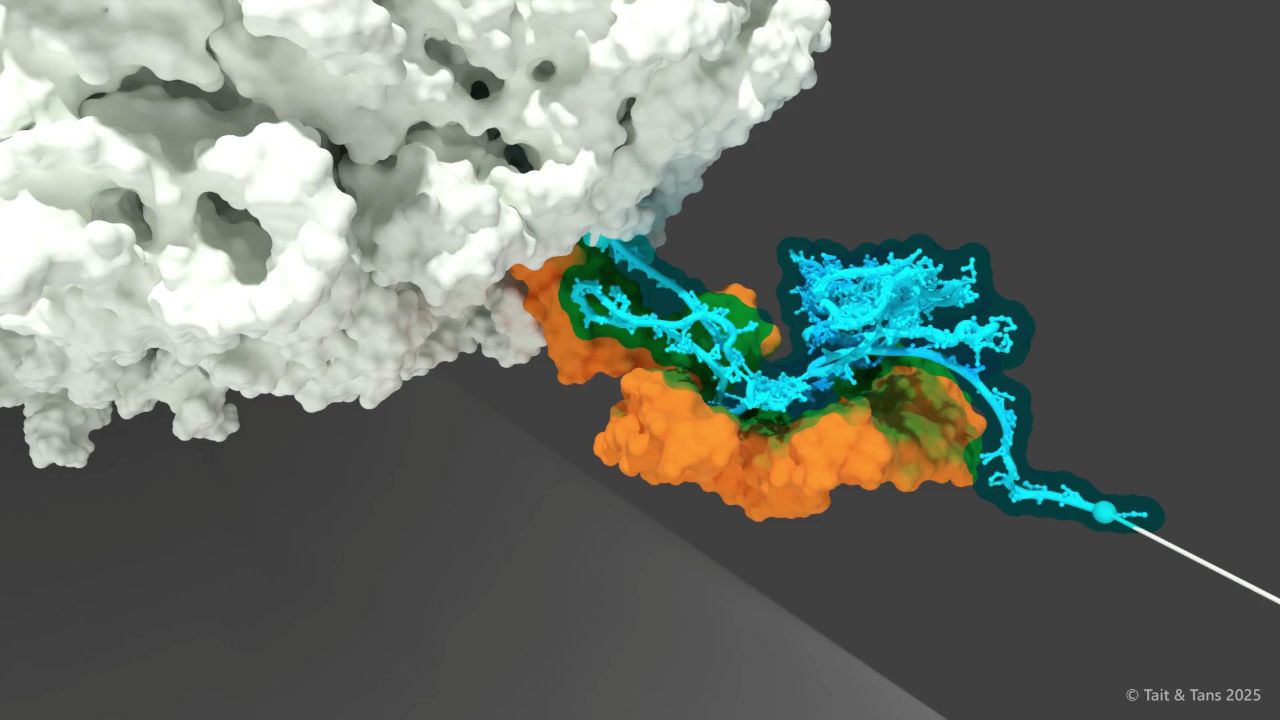
Researchers have discovered that two helper molecules follow a surprisingly simple ‘folding rulebook’ to guide protein folding in cells. Katharina Till (Biophysics) studied individual protein chains as they emerged from ribosomes, becoming the first person to witness these processes in real time.
Watch this short video on Youtube for an impression. |
|
|
|
|
|
Jeroen van Zon appointed professor at Leiden University |
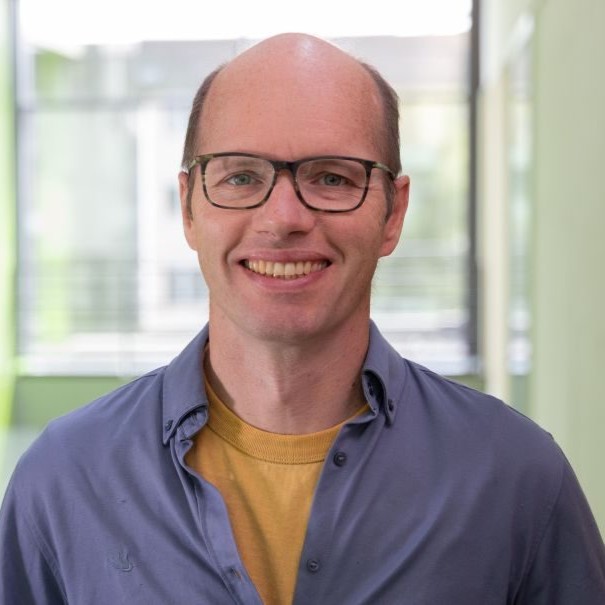
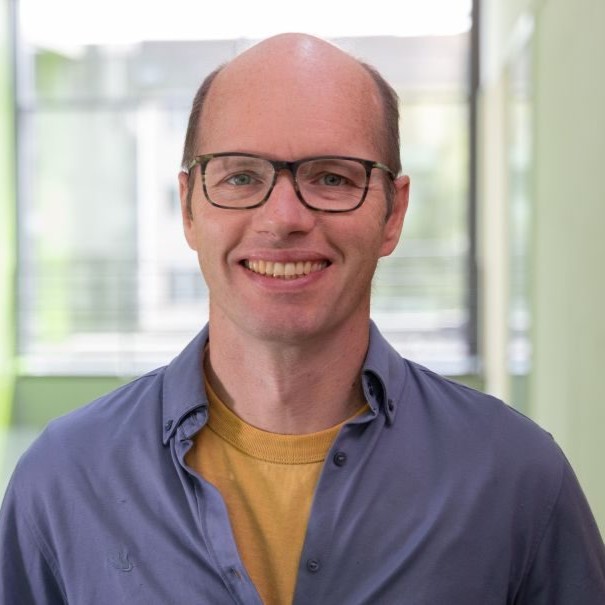
Jeroen sees his professorship as an opportunity to start new collaborations, particularly with researchers at Leiden’s Institute of Biology (IBL). The title of his chair is Quantitative Developmental Biology. |
| |
|
|
|
Many smiling faces at Wetenschapsdag |
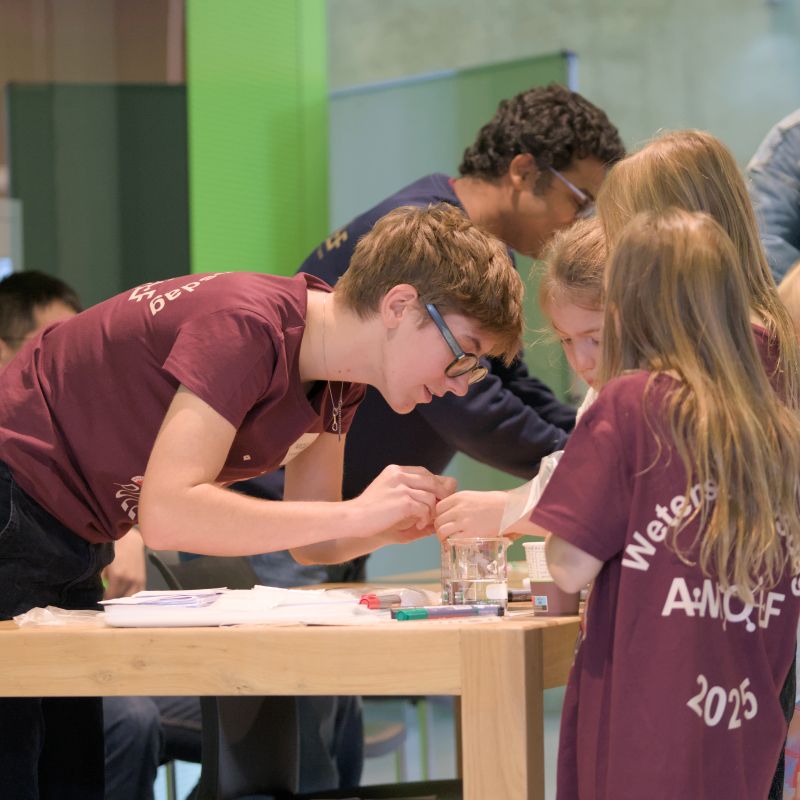
AMOLF and neighboring research institutes opened their doors to the public on October 4 for the annual outreach event. Visitors engaged with researchers through demonstrations, lectures, lab tours, and workshops. |
|
|
|
|
|
Latest doctorate celebrations |
|
|
|
|
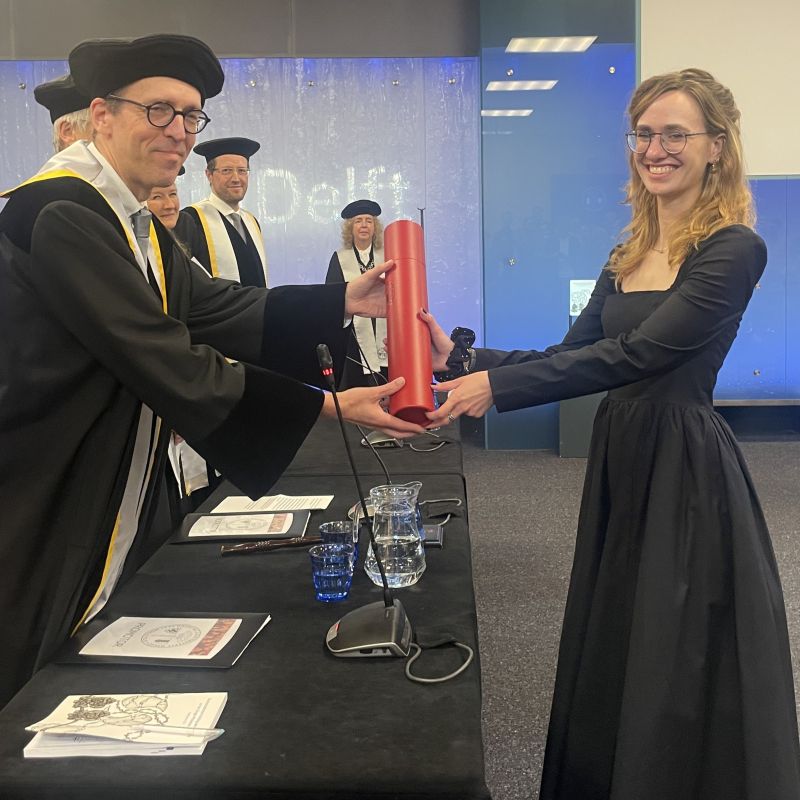
Katharina Till investigated the dynamics of protein folding and the influence of helper molecules, the so-called chaperones. On September 18, she defended her thesis 'Cotranslational Folding and Assembly at the Single-Molecule Level' at Delft University of Technology. Katharina conducted her research in the group of Sander Tans. |
|
|
|
|
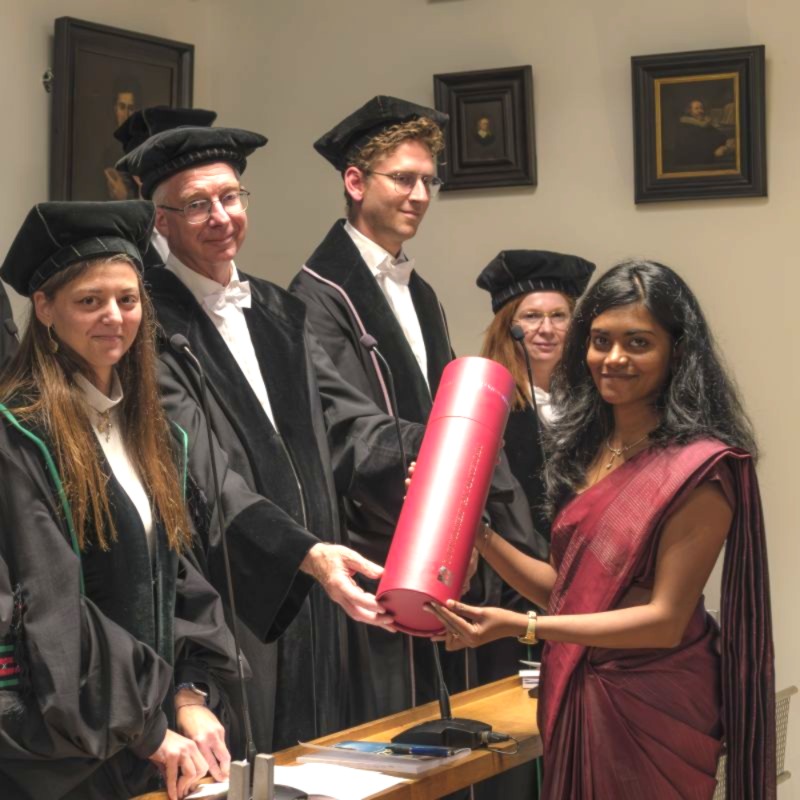
Daphne Antony studied the role of ion interactions in chemical reactions, ranging from crystal growth to electrochemistry. On September 30, she defended her thesis 'Ion the Prize: The Dynamic Role of Ions at the Solid–Liquid Interface' with the distinction cum laude. Daphne conducted her research in the group of Esther Alarcón Lladó. |
| |
|
|
|
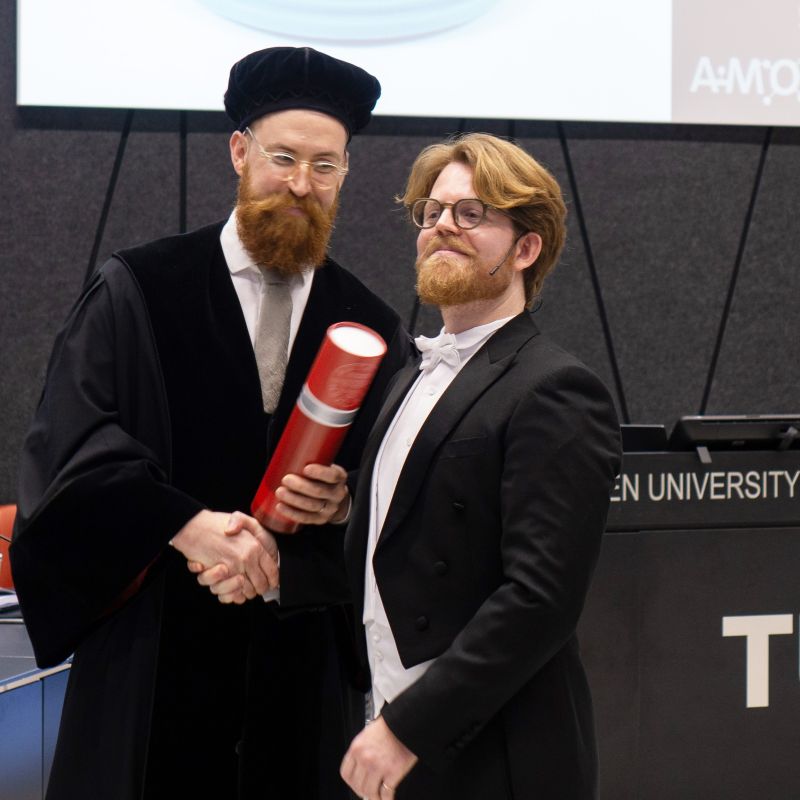
Alberto Comoretto built soft robots that rely on their own 'bodies' to perform tasks. His robots are remarkable: one can walk, hop, and swim without a central brain, while another can 'remember' past interactions. Alberto conducted his research in the group of Bas Overvelde and defended his thesis cum laude on October 30. |
|
|
|
|
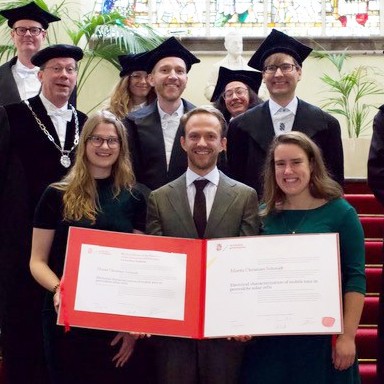
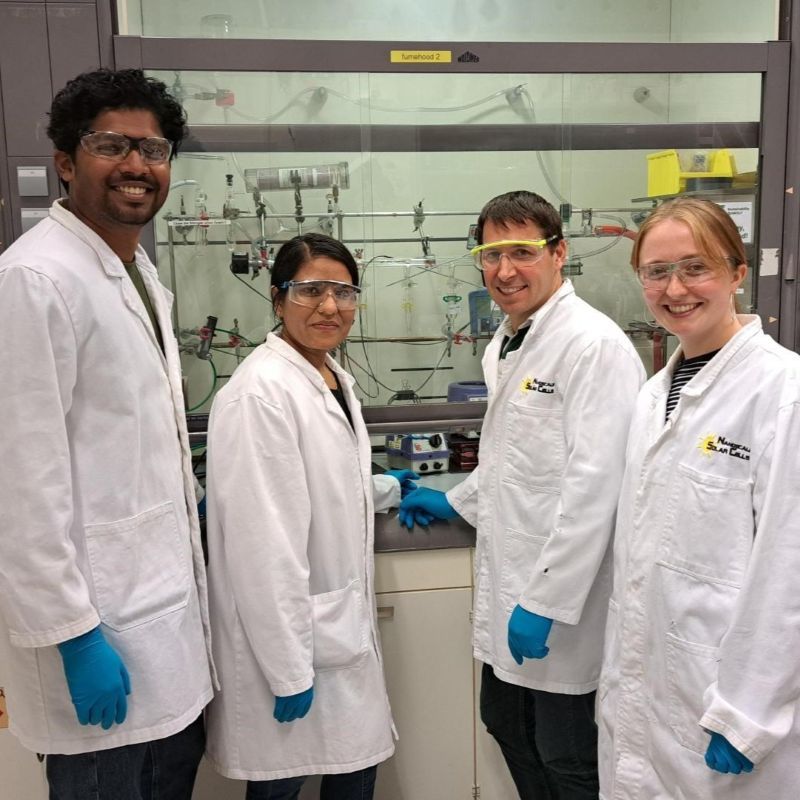
Moritz Schmidt worked on the quantification of mobile ions in perovskites, a promising material for the next generation of solar cells. These mobile ions are responsible for the degradation of perovskite devices. Moritz did his research in the Hybrid Solar Cells group and defended his thesis at the University of Groningen on October 31. |
| |
|
|
| |
|
|
New nanostructure metrology technique |
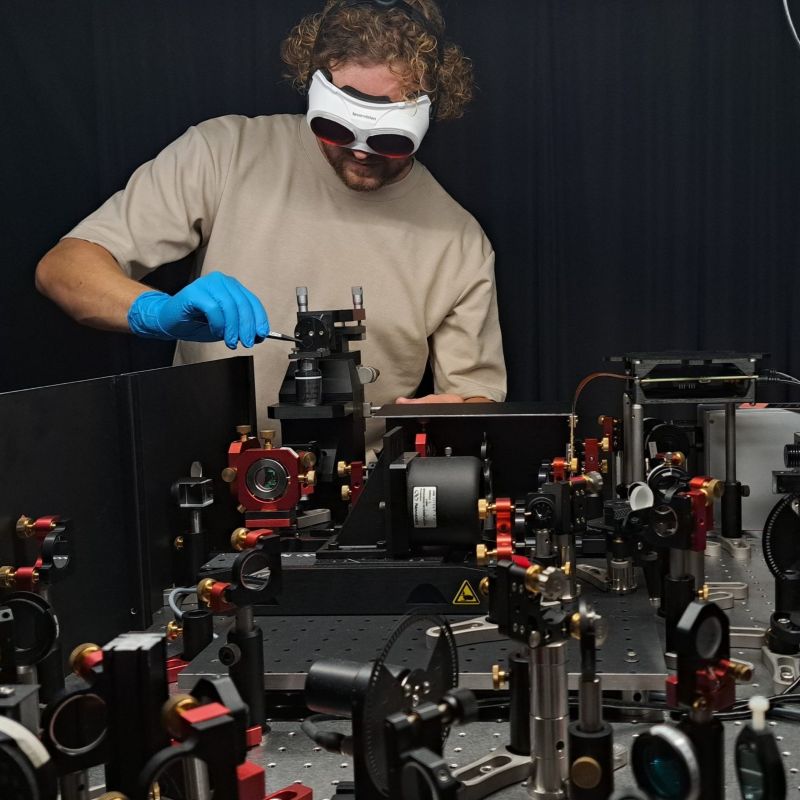
AMOLF-ARCNL researcher Falco Bijloo developed an optical technique to measure structures much smaller than the wavelength of light. The project combines photonic concepts with semiconductor industry applications. |
|
|
|
|
Algorithm helps researchers with 3D cell tracking |
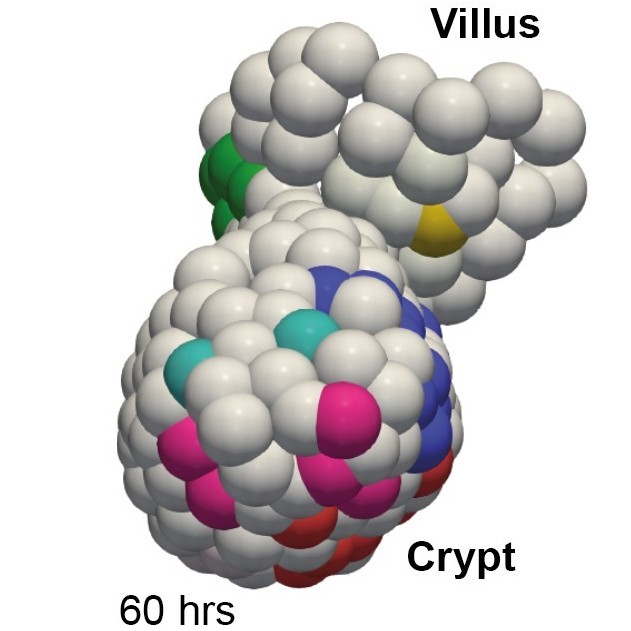
Frustrated by the time required to check cell-tracking data, PhD student Max Betjes developed an algorithm for more efficient cell-tracking analysis. He validated the method by studying cell movements in miniature organs. |
| |
|
|
|
Water molecules under control |
Researchers have demonstrated vibrational strong coupling in water layers only a few nanometers thick. They used metal nano-structures. This breakthrough opens the door to controlling chemical reactions in new ways. |
|
|
|
|
|
Science Park 104
1098 XG Amsterdam
The Netherlands
|
| |
|
|
|
|
At AMOLF we wish to understand the fundamental physics and design principles of natural and human-made complex matter. We use the obtained knowledge to create novel functional materials that can provide solutions to societal challenges in renewable energy, green ICT, sustainable materials, and healthcare. AMOLF is part of the Dutch Research Council (NWO).
|
|
|
|
| |
|
|
|