Introducing our new director and soft robotic heartbeat
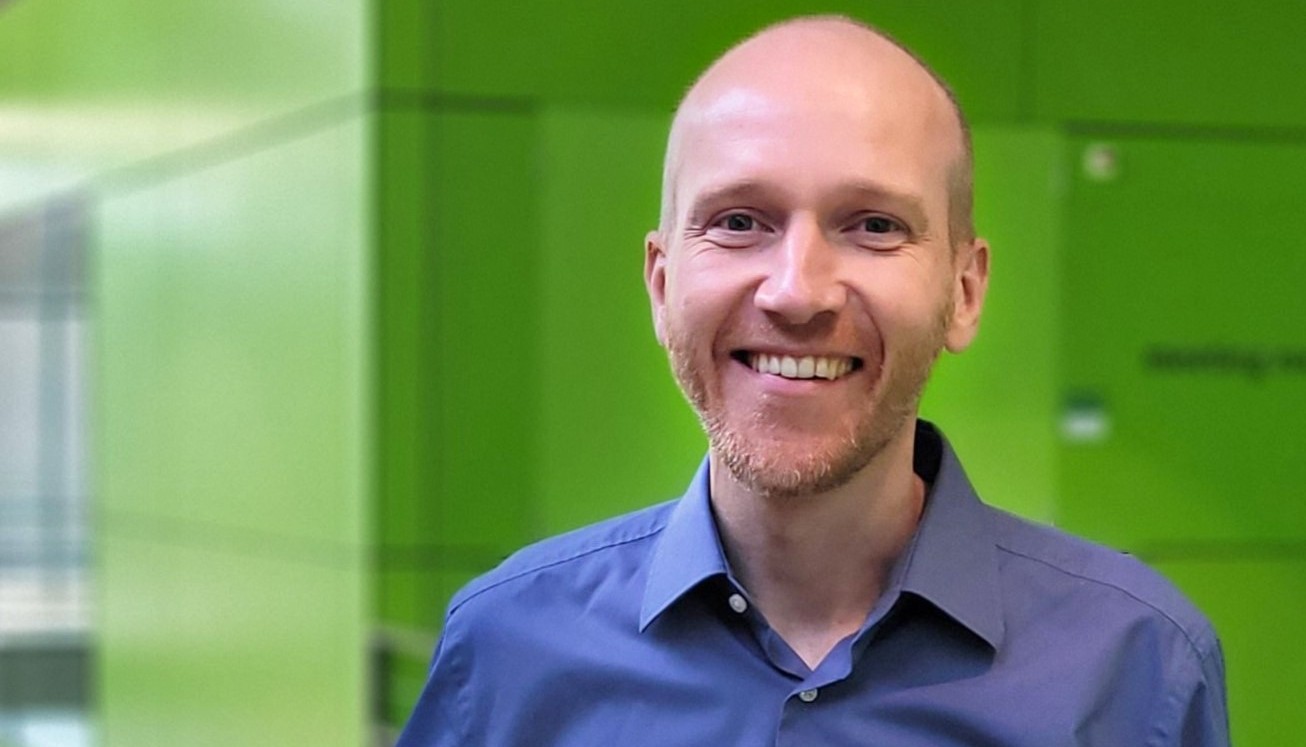
Bruno Ehrler appointed next director of AMOLF |
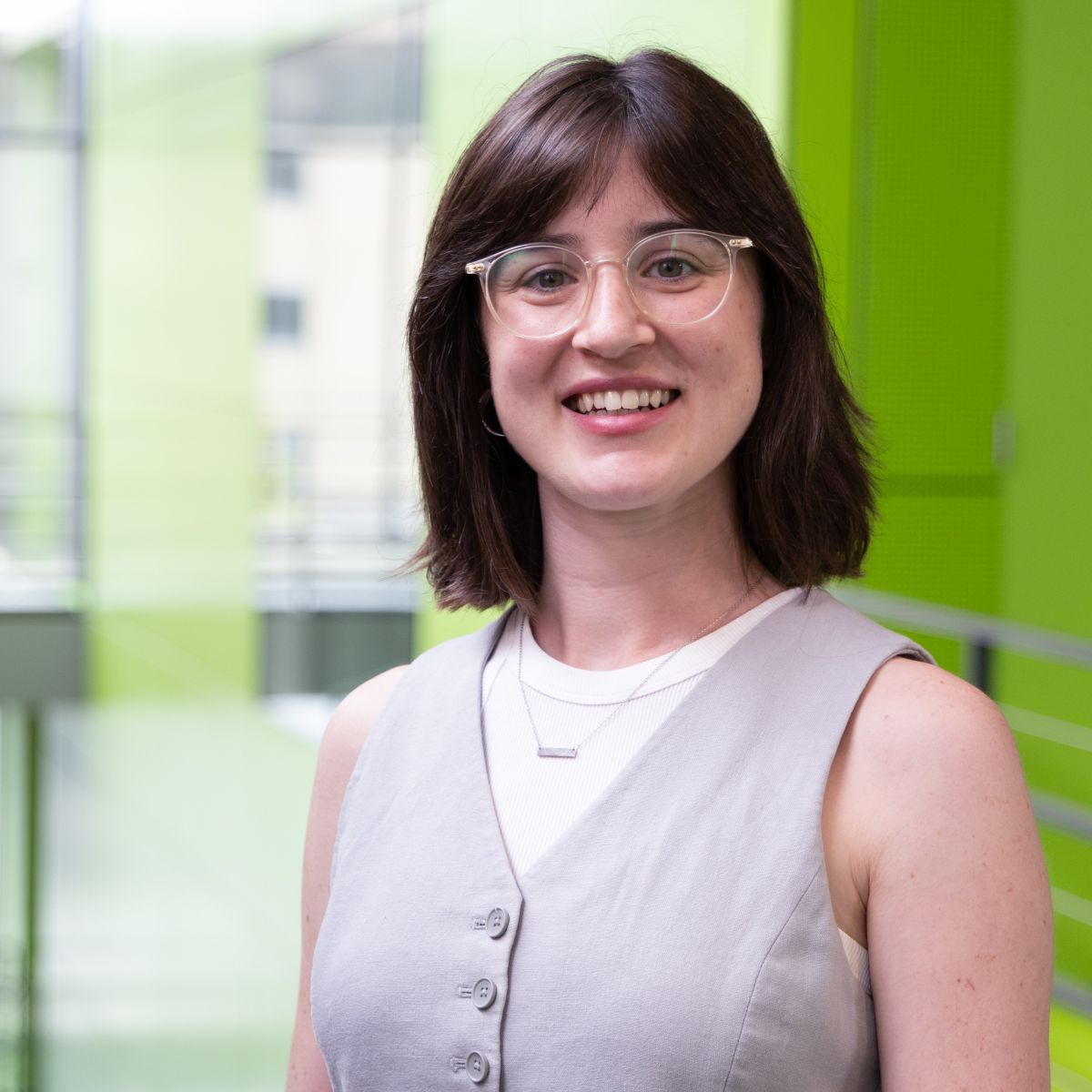
The Board of NWO-I has appointed Bruno Ehrler as new director of AMOLF. With this appointment, AMOLF welcomes a strategic and empathetic leader with a strong scientific track record and a clear vision.
Since joining AMOLF, Bruno has been deeply invested in AMOLF's scientific mission, collaborative culture, and dynamic research program. He is looking forward to contributing to AMOLF's continued excellence as one of the Netherlands’ leading research institutes. |
|
|
|
|
|
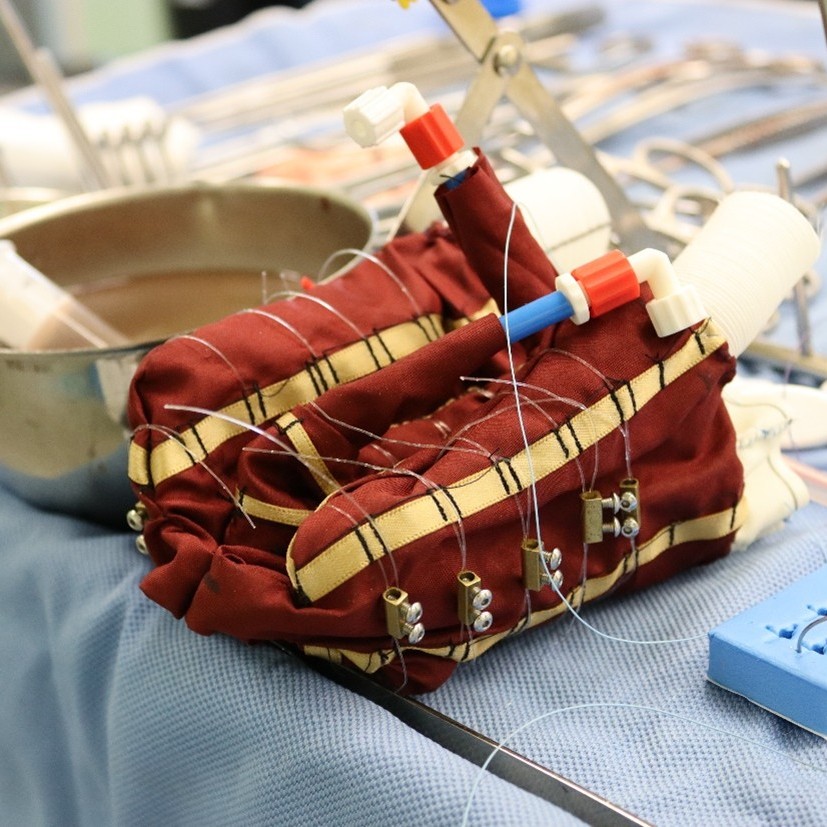
Prototype of first soft robotic artificial heart |
Bas Overvelde and collaborators have taken steps to develop an artificial heart that combines soft robotics with advanced biomaterials. Creating a heartbeat with limited electronics and software is challenging. |
| |
|
|
|
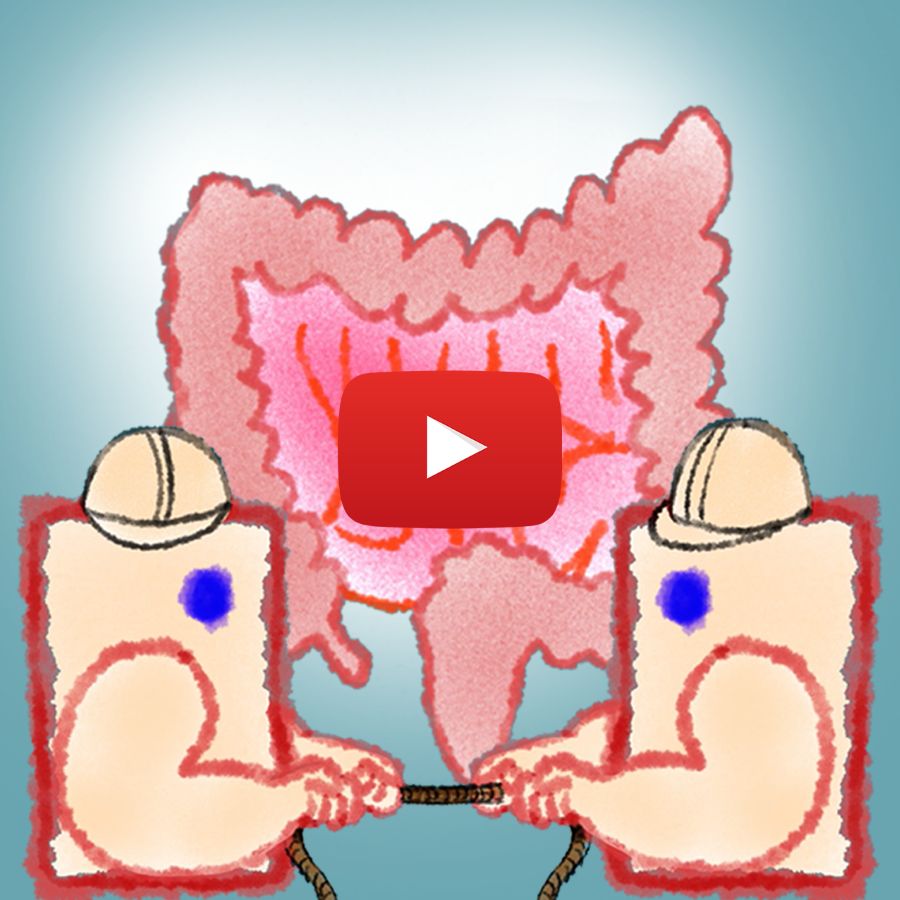
Intestinal surface cells pull rather than push |
Cells on the inner surface of intestines are often replaced. It turns out, they do not push but pull each other out. This insight gives a new view on how a malfunctioning intestine can lead to diseases. Watch the short video on Youtube |
|
|
|
|
|
June and July doctorate celebrations |
|
|
|
|
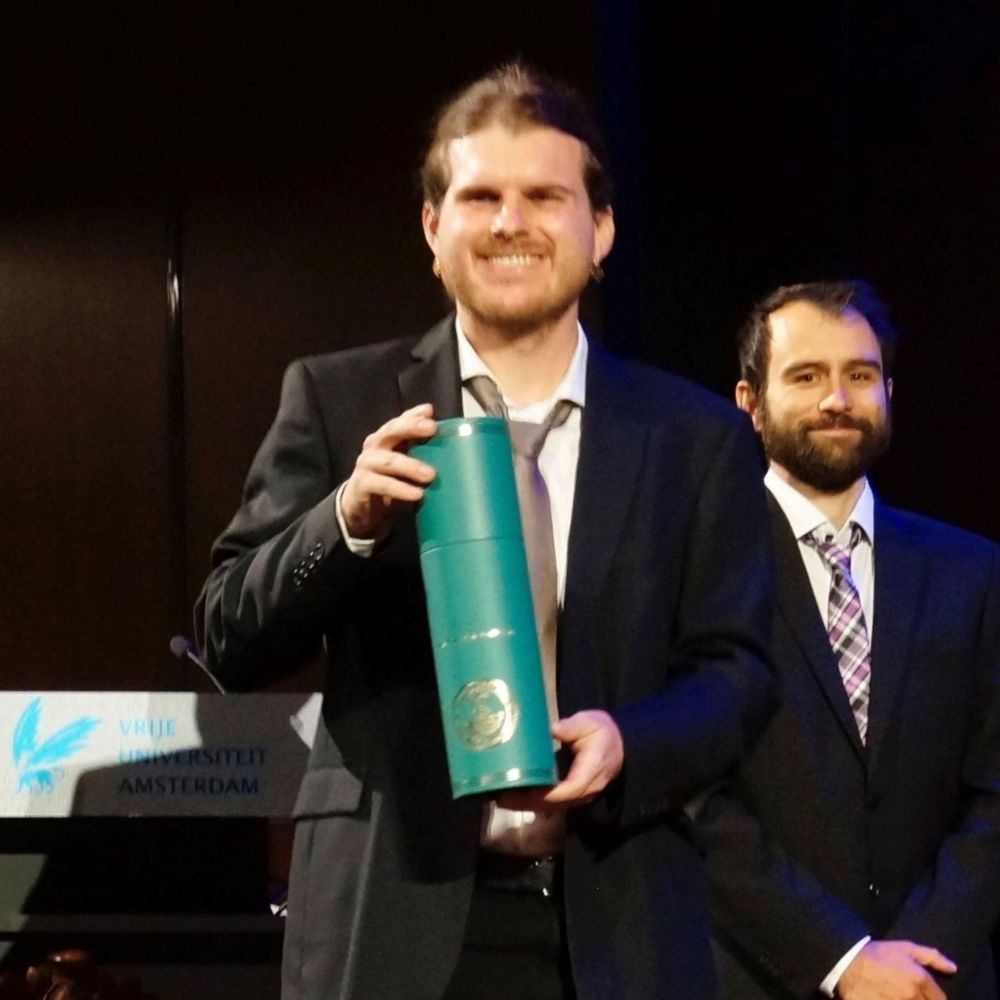
On June 6th, Fotios Avgidis defended his thesis at VU Amsterdam. The thesis aims to understand how function arises from simple components. To this end, Fotios studied single-celled E. coli bacteria that not only cope with variability in molecular processes, but also actively control it to enhance sensing. |
|
|
|
|
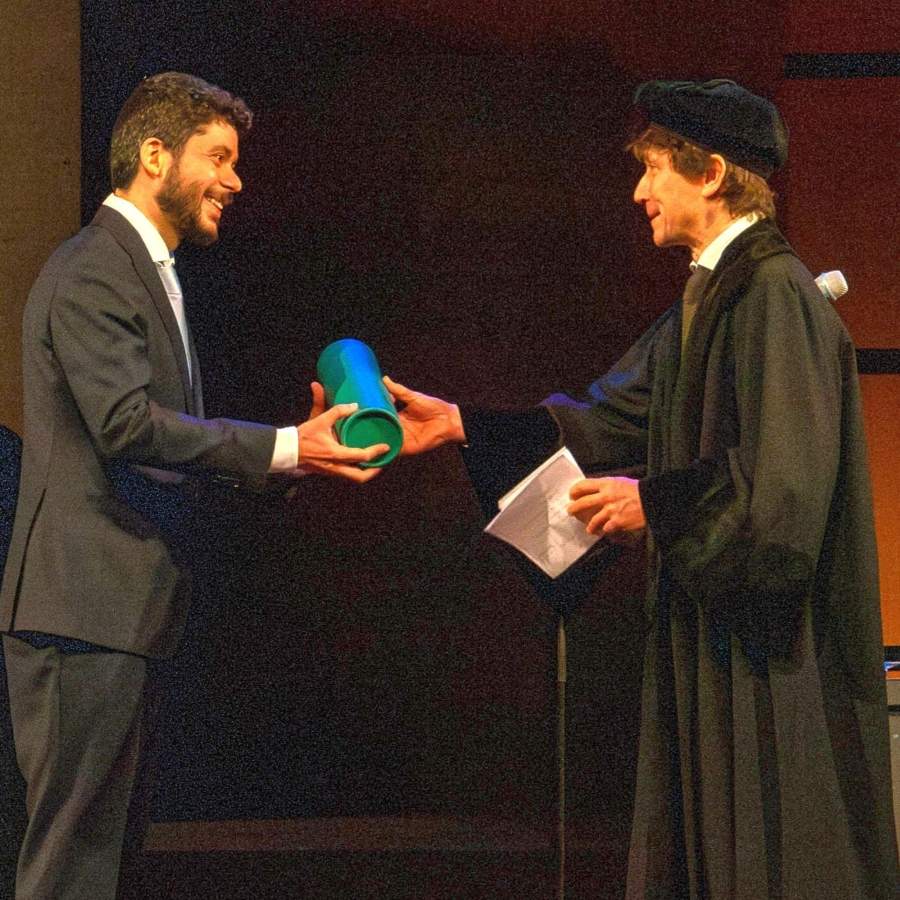
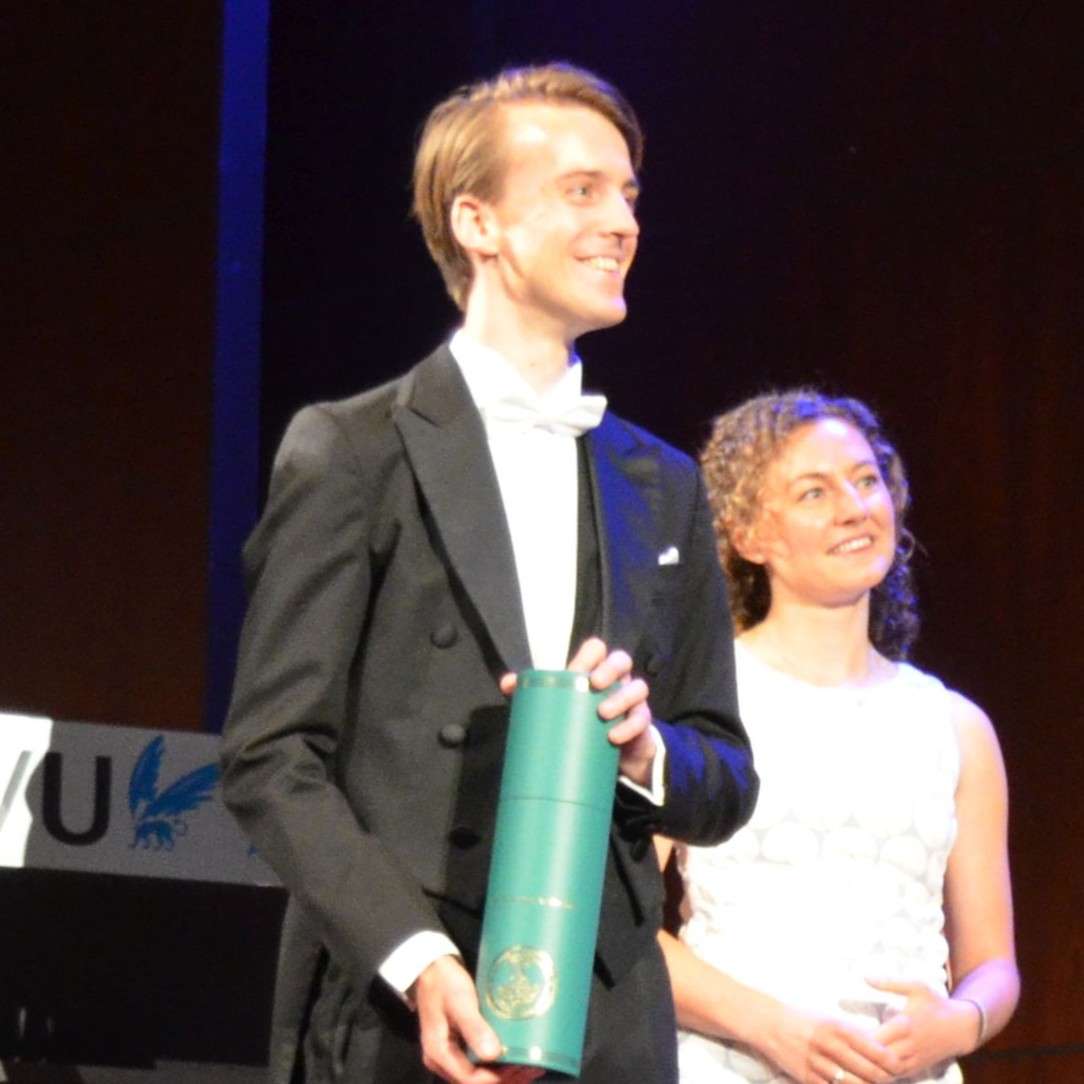
On June 13th, Manuel Reinhardt graduated Cum Laude! He developed a computational technique that, for the first time, allows the exact computation of the speed at which information is transmitted in any system. He also showed how it can be combined with machine learning to extract the same information even without a model. |
| |
|
|
|
On June 19th, Age Tjalma gave the floor to E. coli bacteria while defending his thesis. Age discovered how these single-celled organisms reliably predict the future to increase their survival chances. But, predictions come at a cost. Age showed that - given the available budget in terms of proteins and energy - E. coli makes the best possible prediction. |
|
|
|
|
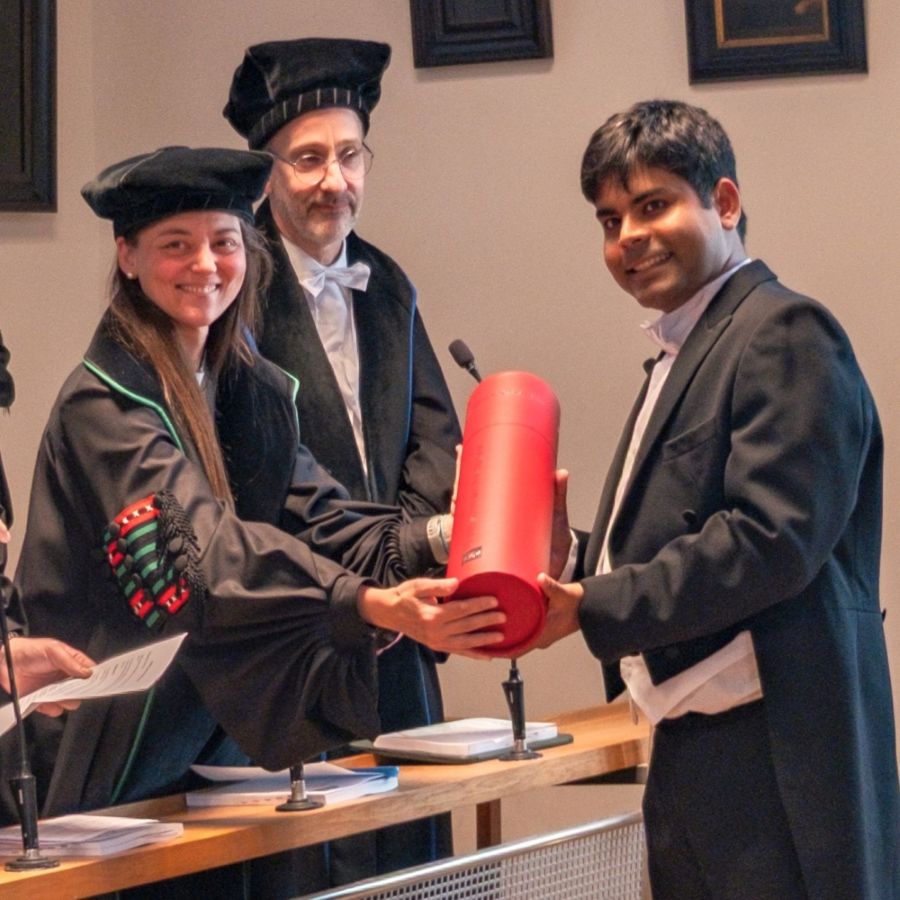
On July 8th, Debapriya (Deba) defended his thesis 'Harnessing Nanophotonics for High Brightness White Micro-LEDs'. Deba successfully boosted the brightness of white phosphor-converted micro-LEDs for use as pixels in next-generation AR/VR displays. He worked closely with industrial partner Lumileds. |
| |
|
|
| |
|
|
ERC Proof of Concept grant to develop measuring technique for halide perovskites |
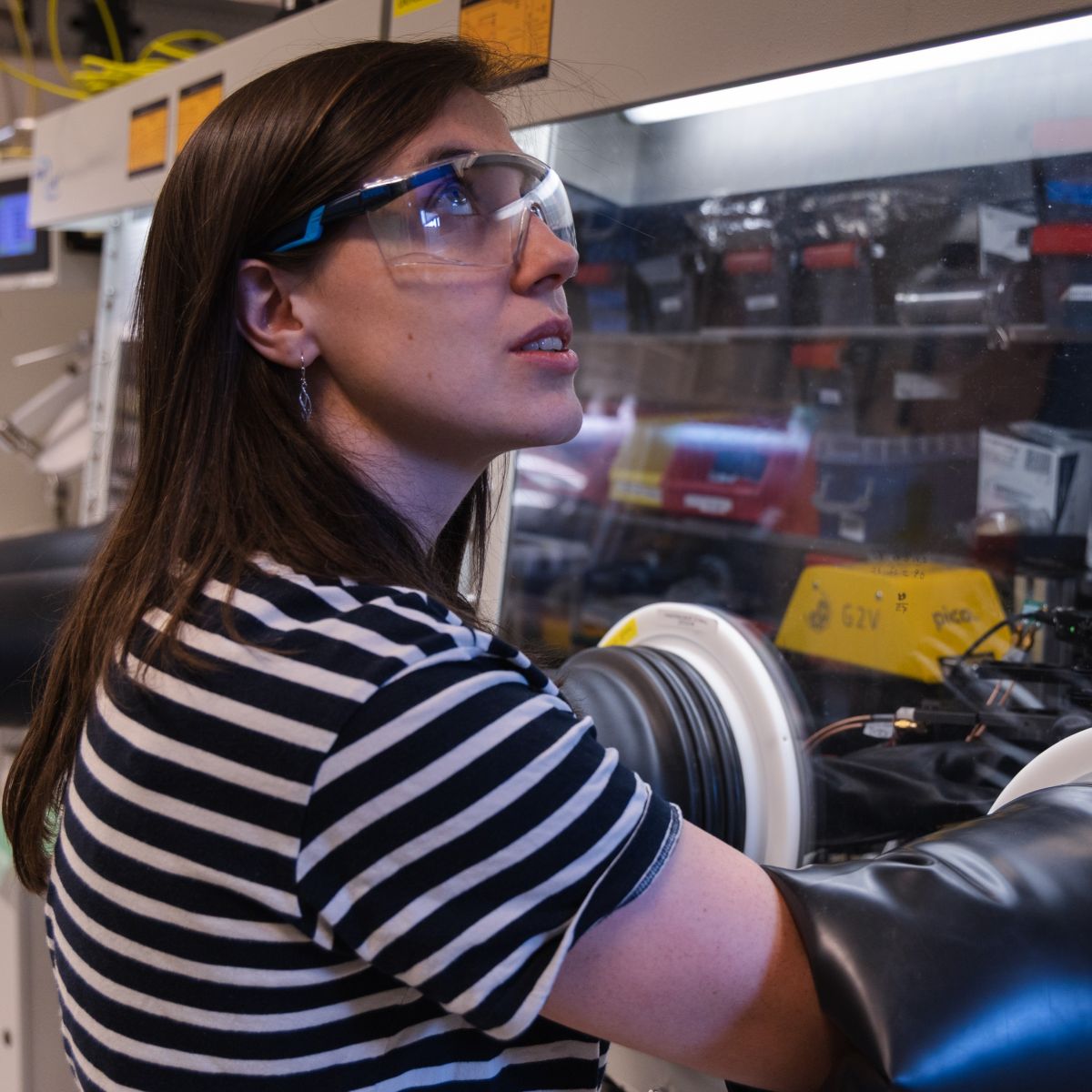
After developing an optical technique to measure ions in halide perovskite semiconductors, Erik Garnett's group is now ready to develop prototype instruments and benchmark. |
|
|
|
|
ZonMW Off Road grant to develop out-of-the box ideas |
Megan Farrell will explore an important safety mechanism of the immune system: switching itself off. Otherwise, it can mistakenly attack the body’s own healthy tissues, leading to autoimmune diseases. |
| |
|
|
|
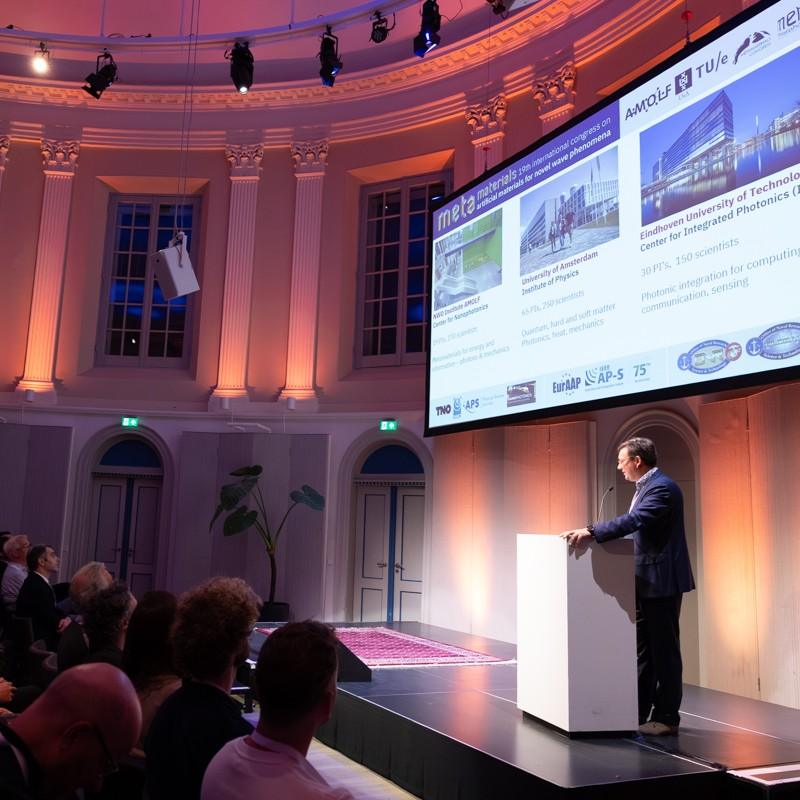
Vibrant Metamaterials2025 brings researchers together |
At the conference, 400 researchers from different disciplines gathered to discuss metamaterials and their applications. Fascinating findings and lively discussions made this an excellent edition. |
|
|
|
|
|
AMOLF opens its doors to everybody with an interest in science. Expect fun workshops, interesting lectures and fascinating demonstrations. |
|
|
|
|
|
Science Park 104
1098 XG Amsterdam
The Netherlands
|
| |
|
|
|
|
At AMOLF we wish to understand the fundamental physics and design principles of natural and human-made complex matter. We use the obtained knowledge to create novel functional materials that can provide solutions to societal challenges in renewable energy, green ICT, sustainable materials, and healthcare. AMOLF is part of the Dutch Research Council (NWO).
|
|
|
|
| |
|
|
|