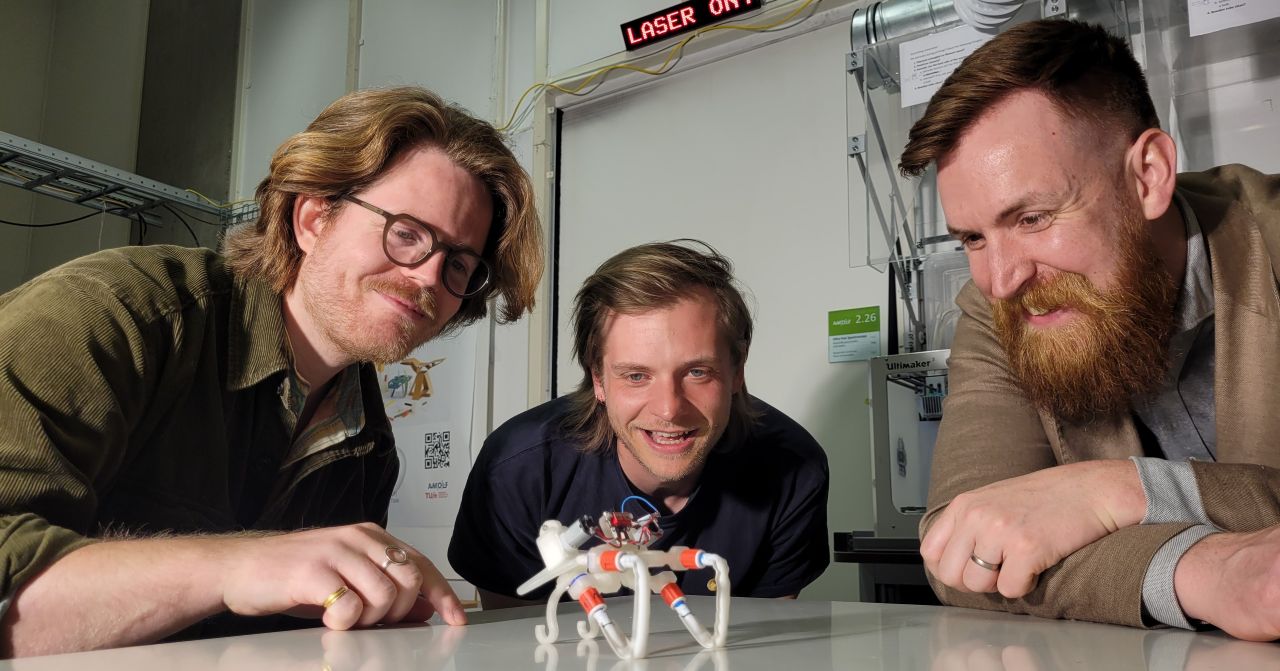
This soft robot ‘thinks’ with its legs |
|
|
|
|
In a study published in Science, AMOLF researchers Alberto Comoretto, Mannus Schomaker and Bas Overvelde reveal one of the fastest and simplest soft robots ever made. It has no computer, no sensors, and no software. Yet, it moves with surprising coordination and autonomy. Its legs are made of soft tubes that begin to flap when air flows through them. When physically coupled together, the tube legs spontaneously sync up into rhythmic patterns — allowing the robot to walk, hop, or swim depending on the environment.
Watch this short movie showcasing the machine’s behavior and underlying physics. It has reached over 57.000 views! |
|
|
|
|
|
A new mechanism for concentrating light on a chip |
In Physical Review Letters, theoretical physicist Menachem Stern reveals his latest findings on physical learning, a new research field that links neural network learning with the evolution and adaptation of living systems. |
| |
|
|
|
|
New properties discovered in promising optical materials |
Halide perovskites are promising materials for harvesting and controlling light. AMOLF researchers now report the first observation of optical nonlinearity in these crystals under continuous laser illumination, as published in Nature Photonics. |
|
|
|
|
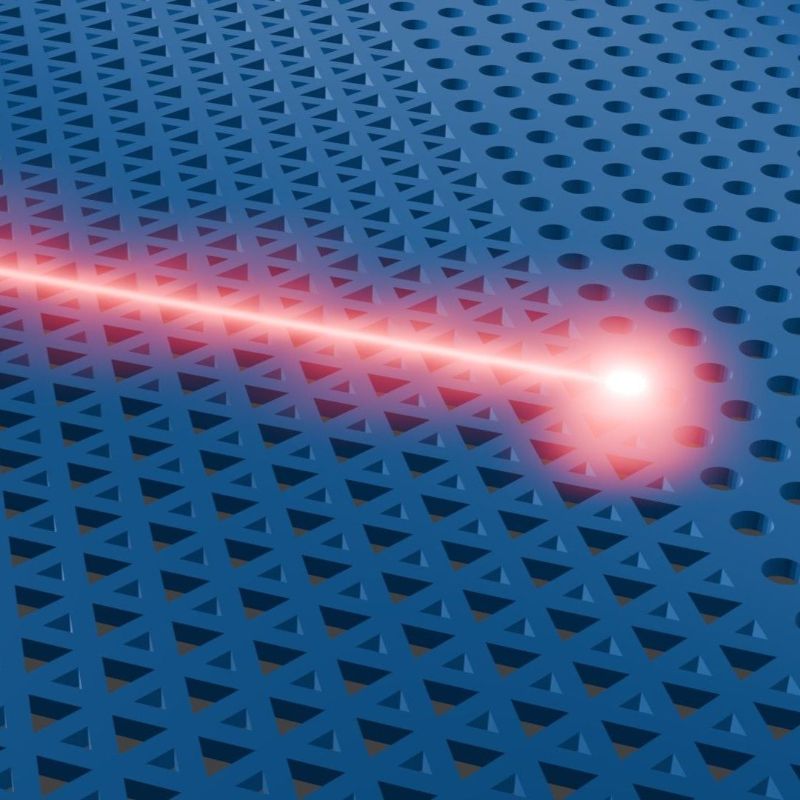
A new mechanism for concentrating light on a chip |
Focusing light at the scale of its wavelength is challenging. Researchers from AMOLF, TU Delft, and Cornell present a new photonic crystal method that works across more wavelengths. Published in Science Advances on April 18. |
| |
|
|
|
|
|
|
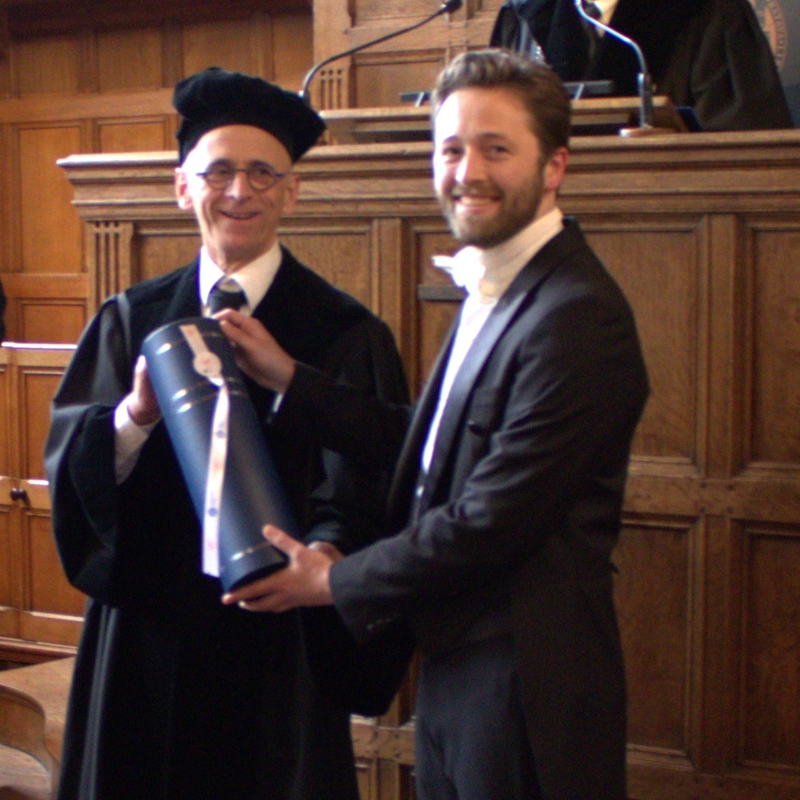
PhD student Burak Demirbas defended his thesis at Leiden University on May 16th.
He did his doctoral research in the group of Jeroen van Zon.
Burak studied the dynamics of a particular protein, which, in the worm C. elegans, is associated with growth inhibition in response to stress. |
|
|
|
|
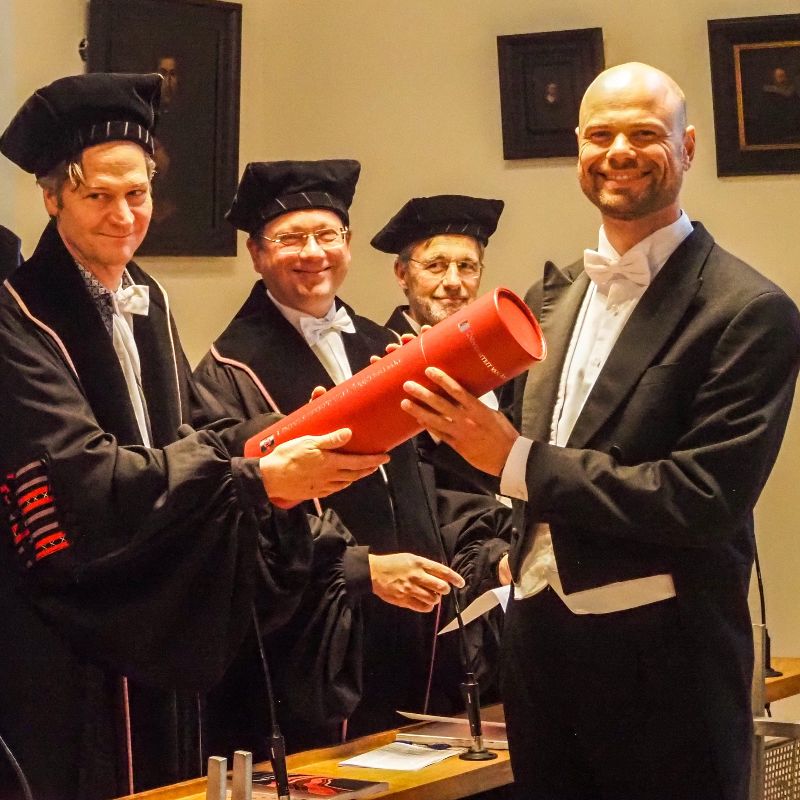
On May 28th, Lennard successfully defended his thesis, in which he answers many questions about the behavior of mechanical metamaterials.
The properties of metamaterials are defined not just by their molecular makeup but also by their structure. |
| |
|
|
|
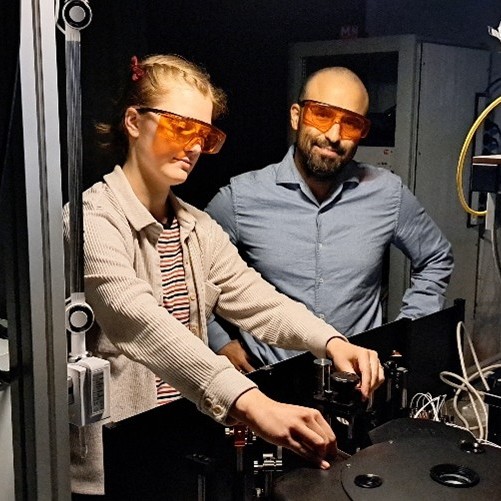
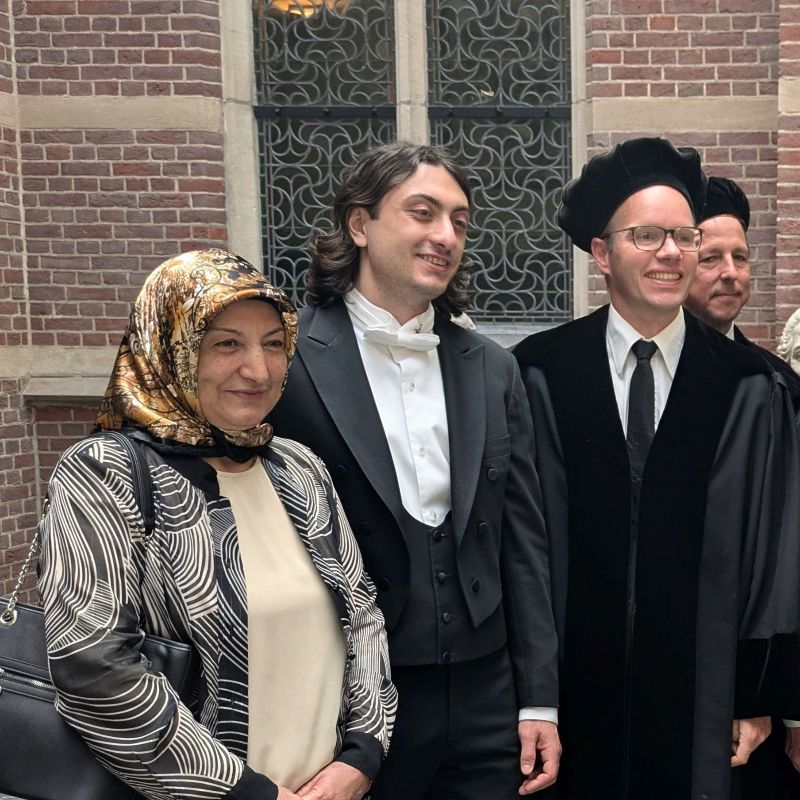
On June 5th, Nelson de Gaay Fortman successfully defended his thesis, Amplifying Plasmonic Metasurfaces, at the University of Amsterdam.
In the group of Femius Koenderink at AMOLF, he built a laser setup to study flat nanostructured materials known as metasurfaces that capture and manipulate light. |
|
|
|
| |
|
|
Infomatter symposium: taking advantage of information in a system |
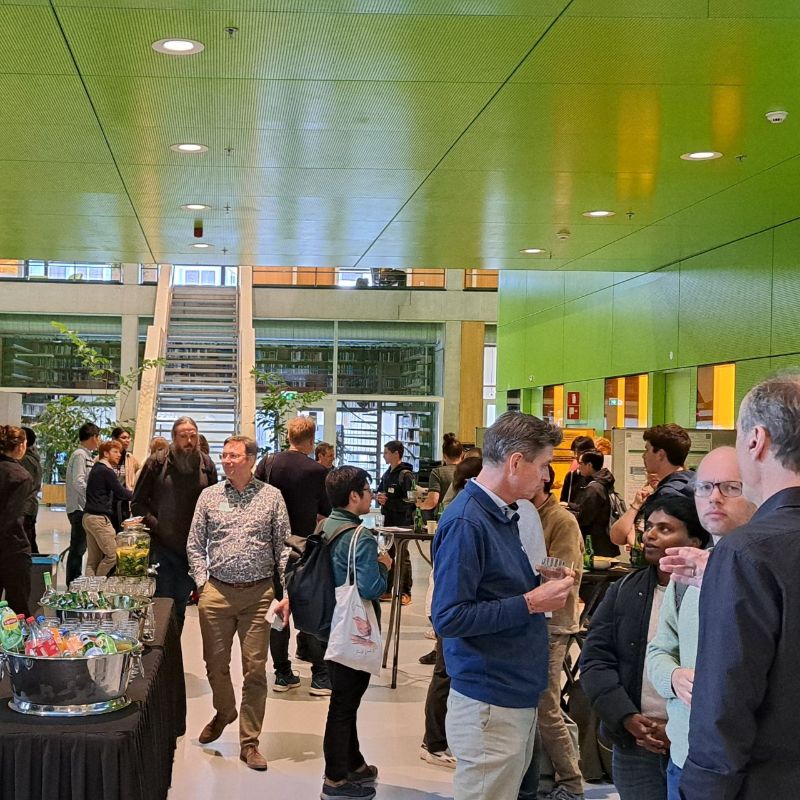
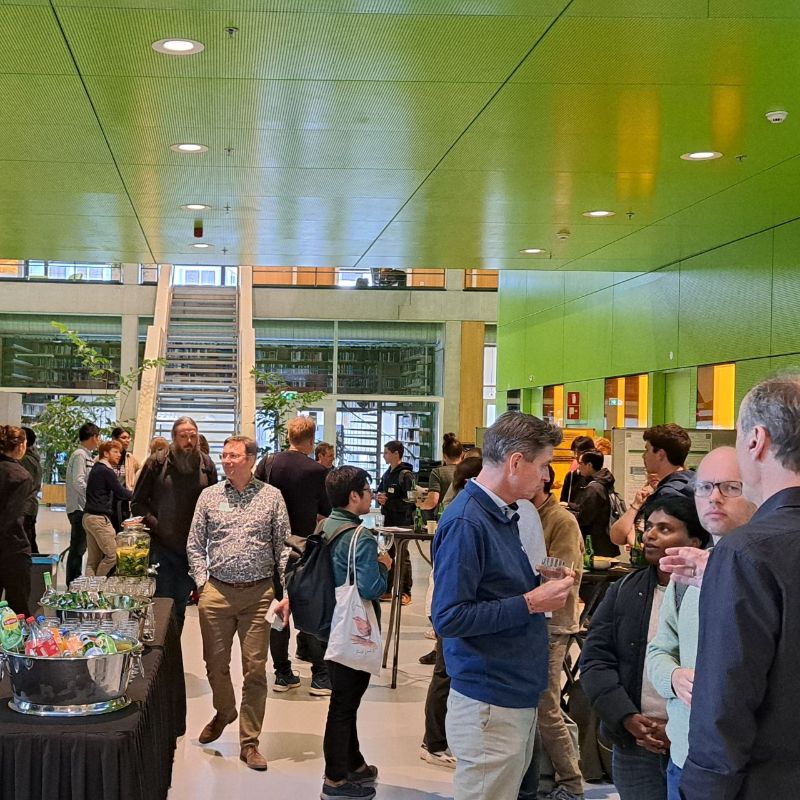
This spring, AMOLF organized the Infomatter Symposium to discuss developments in information processing, such as systems that do not rely on conventional computers and therefore use much less energy. |
|
|
|
|
NWO grant to make perovskites ‘sing’ |
AMOLF researcher Fanny Thorimbert has received an NWO grant in the Open Competition ENW-XS call. Together with other researchers in the Nanoscale Solar Cell group, Fanny will investigate the material perovskite. |
| |
|
|
|
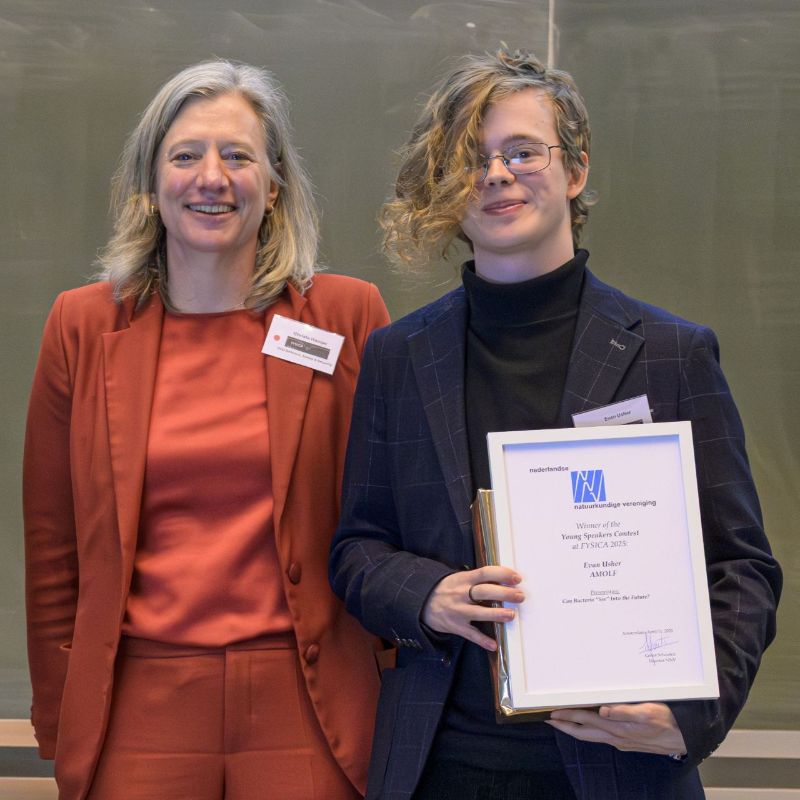
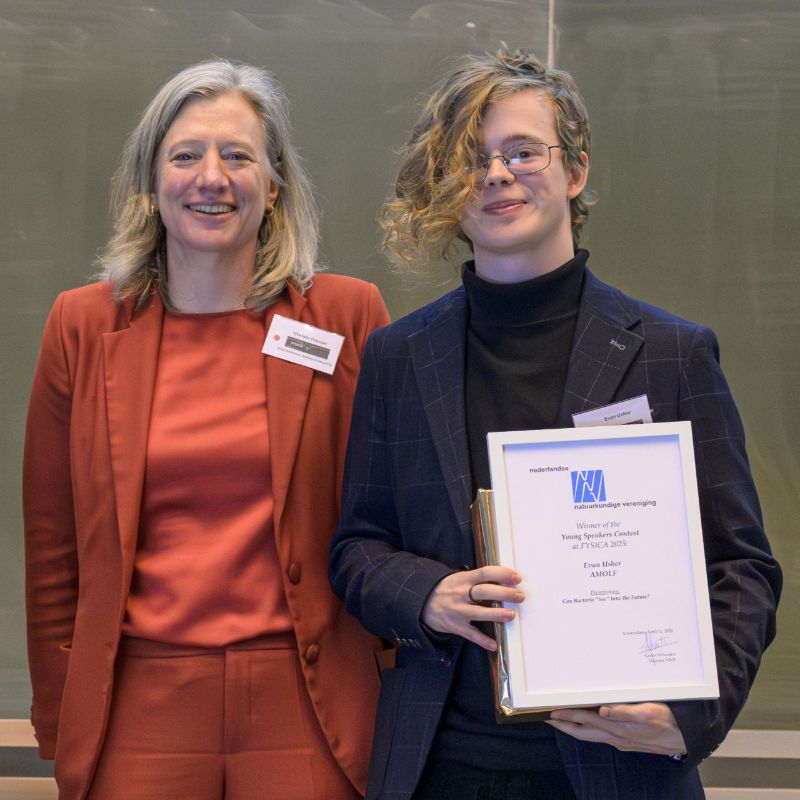
PhD Evan Usher wins Young Speakers Contest at FYSICA |
Evan Usher won the Young Speakers Contest at the FYSICA congress, organized by the Nederlandse Natuurkundige Vereniging, for his presentation on bacterial information processing in the field of biological physics. |
|
|
|
|
AMOLF, CWI, and DIFFER launch HELIOS project with NWO-I funding |
An AMOLF collaboration with CWI and DIFFER has received funding from NWO-I to launch a joint project: HELIOS, an AI-guided materials discovery facility for solar energy materials. |
| |
|
|
|
|
The 19th International Congress on Artificial Materials for Novel Wave Phenomena – Metamaterials 2025: a unique topical forum to share the latest results of metamaterials research. |
AMOLF opens its doors for everybody with an interest in science. Expect fun workshops, interesting lectures and fascinating demonstrations. |
|
|
|
|
|
Science Park 104
1098 XG Amsterdam
The Netherlands
|
| |
|
|
|
|
At AMOLF we wish to understand the fundamental physics and design principles of natural and human-made complex matter. We use the obtained knowledge to create novel functional materials that can provide solutions to societal challenges in renewable energy, green ICT, sustainable materials, and healthcare. AMOLF is part of the Dutch Research Council (NWO).
|
|
|
|
| |
|
|
|